

Table of Contents
- Where Hidden Shipping Costs Hide
- How to Compare Shipping Costs Before You Buy
- Understanding Free Delivery Minimum Spend Thresholds
- International Shipping Fees and Customs Charges Explained
-
Your Pre-Checkout Verification Checklist
- Step 1: Identify all charges before adding to basket
- Step 2: Enter your postcode early and check for location surcharges
- Step 3: Check for minimum order fees and free delivery thresholds
- Step 4: Review the final total at checkout
- Step 5: Check the seller's shipping and returns policy
- Step 6: Look for trust signals and dispute options
- What to Do If You Encounter Unexpected Charges
- Frequently Asked Questions
Last Updated: October 11, 2026
Where Hidden Shipping Costs Hide
The price you see online often isn't the price you pay. Hidden shipping costs pop up at checkout and catch shoppers off guard. Understanding where these charges hide helps you avoid nasty surprises.
Hidden shipping costs are fees that aren't clearly shown until checkout, turning a good deal into an expensive one.
Fees revealed only at checkout
The most common hidden shipping costs appear only when you enter your postcode. You might think shipping is free, then suddenly face a £5-£15 charge you didn't expect. Sellers hide these costs to keep product pages looking attractive. Always check the full cost before adding items to your basket. If a site won't show shipping until checkout, that's a red flag.
Handling and processing charges
Handling fees are separate from shipping and cover packing, labour, or administrative costs. They're often labelled as "order handling" or "fulfillment fee." Read the fine print, these charges add up quickly on smaller orders. Compare the total delivered cost, not just the base price.
Surcharges for location or order size
Your postcode determines your delivery cost. Rural postcodes and remote areas (Scottish Highlands, islands) often face surcharges of £3-£8 extra. Small orders under £20 may trigger a £2-£3 surcharge. Factor this in before checkout.
How to Compare Shipping Costs Before You Buy
Comparing shipping costs across sellers is the best defence against hidden charges. Delivery costs often make the difference in total price.
Check the full price on the product page
Look for a shipping cost calculator on the product page and enter your postcode early. If the site won't show shipping until you add items to your basket, move on. Transparent sellers display this information upfront. Check the shipping policy link (usually in the footer) to see what charges apply and when.
Use a delivery cost calculator
Use a shipping calculator before adding items to your basket. Compare the same item across at least two or three sellers, noting product price and shipping cost for each. The cheapest item price isn't always the cheapest total price.
Compare across multiple sellers
Check at least two or three sellers, shipping cost differences can be £5 or more. Create a simple comparison listing seller, product price, shipping cost, and total.
| Seller | Product Price | Shipping Cost | Total Cost |
|---|---|---|---|
| Seller A | £29.99 | £4.99 | £34.98 |
| Seller B | £32.50 | Free | £32.50 |
| Seller C | £28.99 | £6.99 | £35.98 |
Understanding Free Delivery Minimum Spend Thresholds
Free shipping usually requires a minimum spend.
How minimum spend requirements work
A seller might offer free shipping on orders over £30. The minimum varies by seller (£20 to £50+). These thresholds encourage larger baskets, shoppers often add unplanned items to qualify.
When free delivery actually saves you money
Free delivery saves money only if you were planning to spend that amount anyway. Don't add items you don't need just to qualify, the "savings" are fake. Watch for promotions that lower thresholds during sales.
International Shipping Fees and Customs Charges Explained
Ordering from outside the UK adds complexity: higher shipping costs and potential customs charges. Understanding these costs prevents bill shock at your door.
How UK customs duties are calculated
Customs duties are taxes on imported goods. Duties are calculated on the item value plus international shipping cost (the "dutiable value"). For example, a £50 item with £10 shipping has a dutiable value of £60. At 20% duty, you owe £12.
Duty rates vary by product category:
- Electronics and computers: typically 0-5%
- Clothing and textiles: typically 12-17%
- Beauty and cosmetics: typically 6-8%
- Food and beverages: typically 0-25% (highly variable)
- Books and printed matter: typically 0%
You can check the duty rate for a specific product using the Trade Tariff lookup tool. Enter the product code or description, and it shows the rate that applies.
Import VAT and handling fees
Import VAT at 20% applies to the dutiable value (item plus shipping plus duty). Using the earlier example: a £50 item with £10 shipping and £12 duty has a dutiable value of £72. Import VAT adds £14.40. Couriers and Royal Mail also charge a customs handling fee (typically £2.50-£5) for processing, added to your bill on arrival.
Seller-paid versus buyer-paid customs
Some sellers include customs duties and VAT in their quoted price ("DDP" - Delivered Duty Paid); others don't ("DDU" - Delivered Duty Unpaid). Always confirm before ordering. Email the seller: "Are duties, VAT, and customs handling fees included in the price?" UK customs rules require payment before delivery. If you refuse to pay, the package is returned at your expense.
Estimating your total cost before checkout
Calculate the full delivered cost before buying from an international seller: item price + international shipping + duty (look up the rate on the Trade Tariff tool) + import VAT (20% on dutiable value plus duty) + handling fee (£2.50-£5). Example: A £40 jumper from Europe with £8 shipping, 12% duty, and £3.50 handling fee totals £68.01, not the £48 you might initially think.
When to avoid international orders
If the total delivered cost exceeds the price from a UK seller, buy locally. Always calculate as if duty will apply, don't rely on low-value exemptions. Return policies are more complex for international orders; you'll pay return shipping and potentially import duties again.
Your Pre-Checkout Verification Checklist
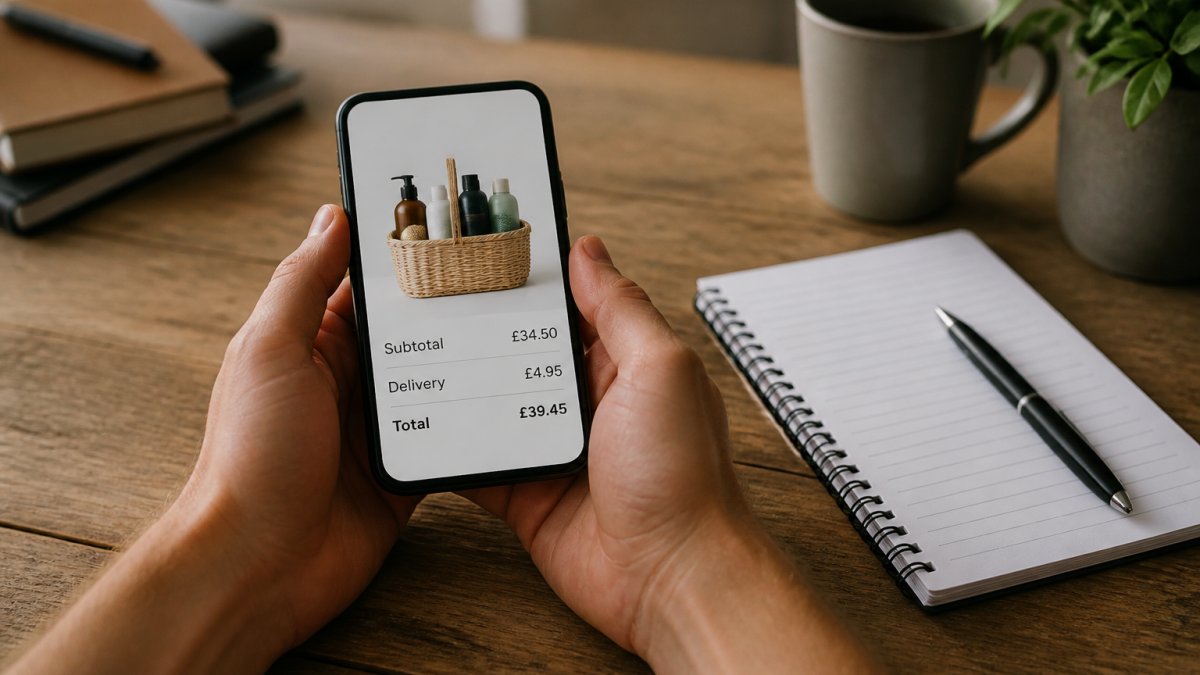
Before completing any purchase, run through this checklist to see the true total cost before entering payment details.
Step 1: Identify all charges before adding to basket
Check the product page for a shipping calculator and enter your postcode. Look for handling fees, processing charges, or fulfilment fees, these are separate from shipping. Watch for labels like "order handling charge," "packing and processing fee," or "fulfilment surcharge." If you see these terms with no explanation, contact the seller before buying. Add up product price, shipping, and other charges.
Step 2: Enter your postcode early and check for location surcharges
Enter your postcode as soon as the site asks to reveal location-based surcharges immediately. Look for phrases like "remote area surcharge," "Highland and Islands delivery charge," or "rural delivery fee." Remote postcodes often cost £3-£8 extra. If the site won't show shipping until you add items to your basket, move to a different seller.
Step 3: Check for minimum order fees and free delivery thresholds
Look for minimum order requirements or free delivery thresholds before checkout. Calculate whether adding another item to reach free delivery is cheaper than paying a small order fee. Example: If free delivery kicks in at £30 and your order is £28, paying a £2.50 fee (total £30.50) is cheaper than adding a £2 item (total £32).
Step 4: Review the final total at checkout
Before you enter payment details, pause. Look at the order summary.
Product price: Does it match the product page?
Shipping: Is this the cost you expected?
Handling fees: Are these listed separately?
Taxes: Are these included in the total?
Discounts or promo codes: Have any been applied?
Return shipping: Some retailers charge for returns. Check the returns policy before checkout.
If anything looks wrong, go back and fix it.
Step 5: Check the seller's shipping and returns policy
Click the shipping policy link before you buy. It's usually in the footer. Read it quickly. This takes 30 seconds and answers most questions before they become problems.
Look for information about:
- Delivery timeframe: How long will it take? Is it an estimate or a guarantee?
- Delivery areas: Do they deliver to your postcode? Some sellers exclude certain areas.
- Return shipping costs: Is return postage free, or do you pay? Some sellers offer free returns; others charge.
- Damaged goods: What happens if something arrives damaged? Do they refund or replace it?
- Customs and duties: If ordering internationally, are these included in the price?
If the policy is unclear or doesn't answer your questions, email the seller before buying. A quick question now prevents frustration later.
Step 6: Look for trust signals and dispute options
Before you enter payment details, check whether the seller offers buyer protection.
Payment method protection:
- Credit card: Covered by Section 75 of the Consumer Credit Act. If the item doesn't arrive or is faulty, your card company can help recover your money.
- Debit card: Covered by chargeback protection. If something goes wrong, you can dispute the charge with your bank.
- PayPal or similar: Offers its own buyer protection. Check the terms.
Seller credentials:
- Is the site HTTPS (secure)? Look for the padlock icon in the address bar.
- Does the seller have customer reviews? Check independent review sites, not just their own website.
- Are there clear contact details? A phone number and email address suggest a legitimate business.
If a seller won't accept credit card payments or has no contact information, that's a red flag. Use a different seller.
What to Do If You Encounter Unexpected Charges
Sometimes hidden charges slip through. You've completed the purchase and noticed an extra fee. Here's what to do.
Dispute the charge with the seller
Contact the seller immediately. Explain the issue. Most reputable retailers will refund unexpected charges.
Email is best. Write clearly. Include your order number. Explain what charge you're disputing and why. Keep the email professional and factual.
Give the seller 5-7 working days to respond. Many resolve issues within 48 hours. If they don't respond, escalate to their customer service manager.
Check your payment protection rights
Your payment method offers protection. Credit cards and debit cards both have dispute processes.
If the seller won't refund an unexpected charge, contact your bank. Explain the situation. Your bank can investigate and potentially reverse the charge.
This process takes 30-60 days. Document everything. Keep emails, screenshots, and order confirmations.
Holla Store Front makes shipping transparent. We show all charges upfront, including delivery costs based on your location.
Frequently Asked Questions
How can I avoid hidden shipping costs when shopping online?
Check the full delivered price before adding items to your basket. Enter your postcode early so the retailer calculates your exact delivery cost. Review all charges at checkout, including handling fees and surcharges. Compare the total cost across multiple sellers before paying. Many retailers now display delivery costs on product pages, so use this information to make informed decisions and avoid surprises at the final stage.
What extra delivery charges should I look for when shopping online?
Beyond the base shipping cost, watch for handling fees, processing charges, and location-based surcharges. Some retailers add fees for rural postcodes or orders under a minimum spend. International orders may include customs duties and import taxes that aren't shown until checkout. Larger or heavier items sometimes trigger dimensional weight charges. Always check the seller's shipping policy and terms before completing your purchase to identify all potential costs.
How do I compare shipping costs between online shops?
Use a delivery cost calculator on each retailer's website by entering your postcode and item details. Note the total delivered price, not just the product price. Compare the same items across different sellers and factor in delivery speed, faster options often cost more. Check whether free delivery thresholds apply and whether you'd need to add extra items to qualify. Document the full costs side by side so you can see which retailer offers the best value overall.
What should I do if a shop adds an unexpected delivery fee at checkout?
First, review the seller's shipping policy to confirm the charge is legitimate. If the fee wasn't disclosed earlier in the purchasing process, contact the retailer's customer service to dispute it or request clarification. You have consumer protection rights under UK law, retailers must show all charges clearly before you commit to payment. If the seller refuses to remove an undisclosed fee, you can raise a dispute with your payment provider or seek help through consumer protection channels.
Shopping online should be straightforward. Hidden shipping costs make it stressful. Use this checklist every time you buy. Compare prices across sellers. Check shipping policies. Enter your postcode early.
These simple steps save money and prevent frustration. You'll spot overpriced shipping before you commit to a purchase. You'll find the best total price, not just the lowest product price. Most importantly, you'll know exactly what you're paying before you hit the checkout button.
